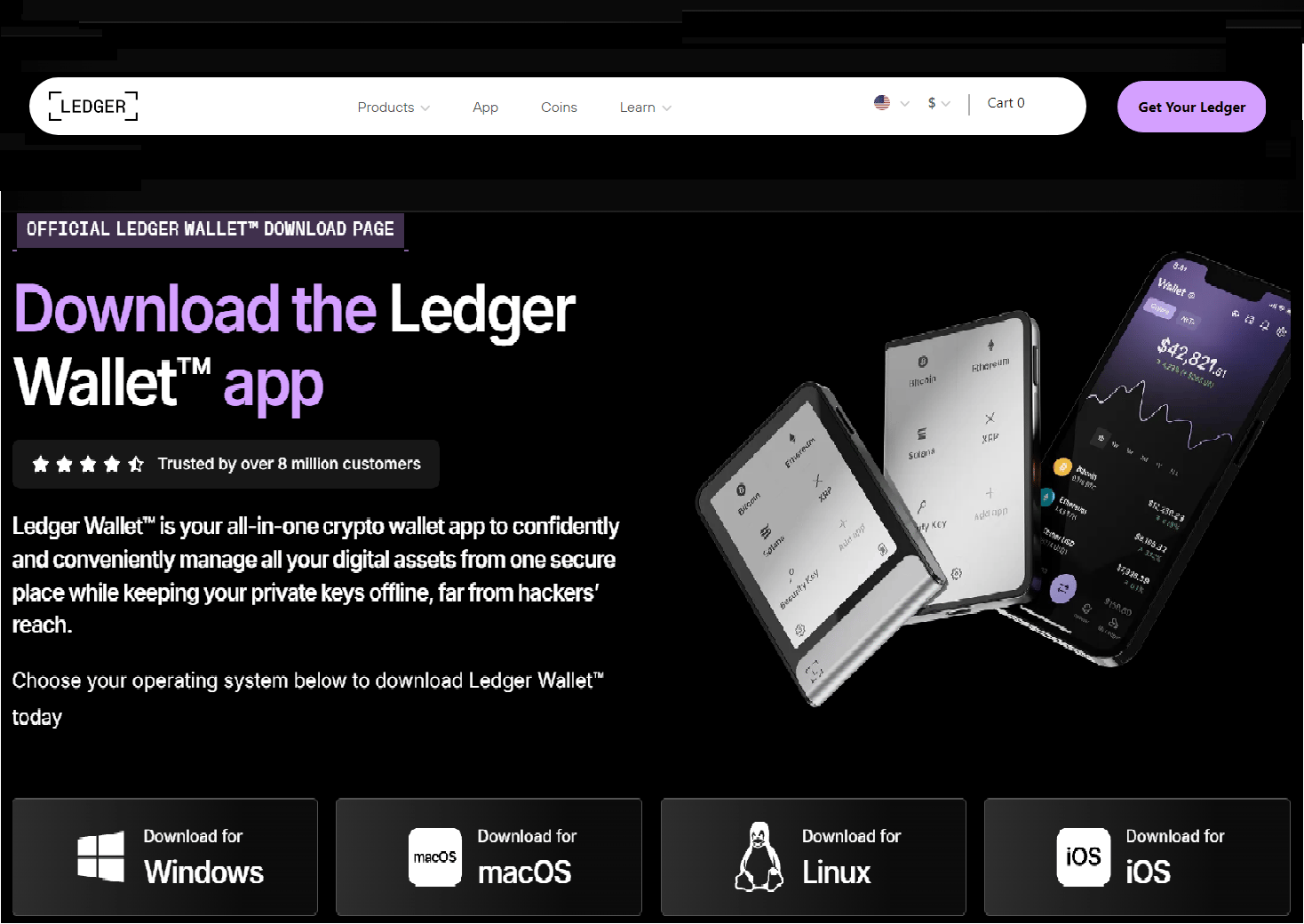
Ledger Live Desktop: Building a More Organized Digital Asset Workspace
Cryptocurrency management becomes easier to understand when account information, transaction records, and security practices are organized into a consistent workflow. Ledger Live Desktop provides a computer-based interface for managing supported cryptocurrency accounts alongside a compatible Ledger hardware wallet. Exploring its features can help users make informed decisions and maintain better control over everyday wallet activities.
Ledger Live Desktop is companion software designed for supported Ledger hardware wallets. It provides access to account information, portfolio overviews, transaction histories, and other available management features.Before using the application, make sure your computer is updated and protected. A personal computer with current security updates is preferable to a public or shared device.Download Ledger Live Desktop only after independently verifying Ledger’s official website. Avoid unfamiliar download pages, unofficial installers, and links received through unexpected messages.Once the application is installed, become familiar with its interface before making account changes. Understanding where account information and transaction records appear can make future use more straightforward.
A cryptocurrency portfolio may contain several assets with different values, networks, and transaction histories. Ledger Live Desktop can help users review supported accounts through a centralized interface.The portfolio overview offers a general picture of supported holdings, while individual account pages provide more specific information. Reviewing both views can help explain how different accounts contribute to the overall portfolio.Remember that displayed values can change as market prices fluctuate. A portfolio estimate is not a guaranteed cash value, and cryptocurrency prices can move significantly.For better organization, review account details periodically and keep separate records of important transactions without including confidential wallet information.
Not every cryptocurrency or blockchain network works in exactly the same way. Supported assets and available functions may vary depending on the hardware wallet model and application configuration.Before using an account, check that the intended asset and network are supported. Pay particular attention to tokens that can operate across multiple networks.When receiving funds, confirm the network required by the sender or recipient. When sending cryptocurrency, verify that the destination address is compatible with the selected asset and network.Choosing an incorrect network can create serious transfer problems. Never assume that matching cryptocurrency names automatically mean that two transfer methods are interchangeable.
Transaction history can provide useful information about previous account activity. Ledger Live Desktop allows users to review records for supported accounts and understand how balances have changed.When examining an entry, consider the asset, amount, transaction date, and available status information. If an unfamiliar transaction appears, investigate it before making additional transfers.It may also be helpful to maintain a private transaction log for personal reference. Record relevant dates and amounts, but never include your PIN or recovery phrase in ordinary documents.
Understanding the Importance of Device Verification
A hardware wallet adds a physical approval step to supported transaction workflows. When preparing a transaction through Ledger Live Desktop, the application may ask you to review and confirm the details on your connected device.Read the physical screen carefully. Check the destination address, asset, network, amount, and fee. These details should match the transaction you intended to make.If something appears different, reject the transaction and investigate the issue. Never approve an unfamiliar request simply because the desktop application looks familiar.This verification habit is particularly important because cryptocurrency transfers are generally irreversible.
If your hardware wallet generates a recovery phrase, treat it as highly confidential information. It is a backup that may provide access to the associated assets, so it must remain under your control.Follow the recovery instructions for your exact device and record the words using the recommended method. Store the backup securely offline.Do not photograph recovery words, save them in cloud storage, enter them into websites, or send them through email or messaging services. No legitimate support represe
{"docsConfig":{"theme":"mint","$schema":"https://mintlify.com/docs.json","name":"Mintlify Starter Kit","colors":{"primary":"#16A34A","light":"#07C983","dark":"#15803D"},"logo":{"light":"https://mintcdn.com/pages-liveapps/eKdF5ICPhW5mdFbF/logo/light.svg?fit=max\u0026auto=format\u0026n=eKdF5ICPhW5mdFbF\u0026q=85\u0026s=00933b0230850501829db532f6b1c624","dark":"https://mintcdn.com/pages-liveapps/eKdF5ICPhW5mdFbF/logo/dark.svg?fit=max\u0026auto=format\u0026n=eKdF5ICPhW5mdFbF\u0026q=85\u0026s=29d29e461faff8452ddd633266321baf"},"favicon":"https://mintcdn.com/pages-liveapps/eKdF5ICPhW5mdFbF/favicon.svg?fit=max\u0026auto=format\u0026n=eKdF5ICPhW5mdFbF\u0026q=85\u0026s=0045c6256bbb612d5e76f6c04c308959","navbar":{"links":[{"href":"mailto:support@mintlify.com","label":"Support"}],"primary":{"type":"button","label":"Dashboard","href":"https://app.mintlify.com"}},"footer":{"socials":{"x":"https://x.com/mintlify","github":"https://github.com/mintlify","linkedin":"https://linkedin.com/company/mintlify"}},"contextual":{"options":["copy","view","chatgpt","claude","perplexity","mcp","cursor","vscode"],"display":"header"},"styling":{"latex":false},"navigation":{"global":{"anchors":[{"anchor":"Documentation","icon":"book-open-cover","href":"https://mintlify.com/docs"},{"anchor":"Blog","icon":"newspaper","href":"https://mintlify.com/blog"}]},"pages":[]}},"deployment":{"deploymentMetadataValue":{"subdomain":"pages-liveapps","hasAudioNarration":false,"actualSubdomain":"pages-liveapps","customDomains":[],"gitSource":{"type":"artifacts","owner":"prod","repo":"6ae99dd85b62f411be126379","deployBranch":"main","contentDirectory":"","isPrivate":true,"mountPath":"","label":"","_id":"6ae99e1e9c93302ef2d8d8d2"},"chroma":{"latestBuiltDeploymentHistoryId":"6ae99ef46c96fdb747256daa","collectionId":"e8530bb7-aa01-4f99-90ed-af9a2a0dd22e","liveDeploymentHistoryId":"6ae99ef46c96fdb747256daa","schemaVersion":"v3"},"entitlements":{},"buildId":"6ae99f11a6a628fe15f134ce","clientVersion":"0.0.4045","searchFilterCounts":[]},"assistantConfig":{"enableAskAiButton":false,"enableStarterQuestions":false,"enableContextualStarterQuestions":false,"enableAskAiSearchBar":true},"basePath":"","hasChatPermissions":false,"hasWebMcpPermissions":false,"toggles":[{"name":"kill-isr","enabled":true,"variant":{"name":"disabled","enabled":false,"feature_enabled":true},"impressionData":false},{"name":"agent-mintlify-slack","enabled":true,"variant":{"name":"disabled","enabled":false,"feature_enabled":true},"impressionData":false},{"name":"agent-integrations-settings","enabled":true,"variant":{"name":"disabled","enabled":false,"feature_enabled":true},"impressionData":false},{"name":"automations-pr-grouping","enabled":true,"variant":{"name":"disabled","enabled":false,"feature_enabled":true},"impressionData":false},{"name":"custom-prefix","enabled":true,"variant":{"name":"disabled","enabled":false,"feature_enabled":true},"impressionData":false},{"name":"analytics-v7","enabled":true,"variant":{"name":"disabled","enabled":false,"feature_enabled":true},"impressionData":false},{"name":"user-flows-analytics","enabled":true,"variant":{"name":"disabled","enabled":false,"feature_enabled":true},"impressionData":false},{"name":"no-publish-flow","enabled":true,"variant":{"name":"disabled","enabled":false,"feature_enabled":true},"impressionData":false},{"name":"workos-onboarding","enabled":true,"variant":{"name":"disabled","enabled":false,"feature_enabled":true},"impressionData":false},{"name":"llms-txt-v2","enabled":true,"variant":{"name":"disabled","enabled":false,"feature_enabled":true},"impressionData":false},{"name":"snapshot-serving-live","enabled":true,"variant":{"name":"disabled","enabled":false,"feature_enabled":true},"impressionData":false},{"name":"stripTemperatureMiddleware","enabled":true,"variant":{"name":"disabled","enabled":false,"feature_enabled":true},"impressionData":false},{"name":"support-platform-pylon-zendesk","enabled":true,"variant":{"name":"disabled","enabled":false,"feature_enabled":true},"impressionData":false},{"name":"snapshot-serving","enabled":true,"variant":{"name":"disabled","enabled":false,"feature_enabled":true},"impressionData":false},{"name":"instant-rollback","enabled":true,"variant":{"name":"disabled","enabled":false,"feature_enabled":true},"impressionData":false},{"name":"granular-notifications-server","enabled":true,"variant":{"name":"disabled","enabled":false,"feature_enabled":true},"impressionData":false},{"name":"granular-notifications","enabled":true,"variant":{"name":"disabled","enabled":false,"feature_enabled":true},"impressionData":false},{"name":"automations-fable","enabled":true,"variant":{"name":"disabled","enabled":false,"feature_enabled":true},"impressionData":false},{"name":"fixed-ai-action-pricing","enabled":true,"variant":{"name":"disabled","enabled":false,"feature_enabled":true},"impressionData":false},{"name":"automation-resolve-merge-conflict","enabled":true,"variant":{"name":"disabled","enabled":false,"feature_enabled":true},"impressionData":false},{"name":"scoped-publishing","enabled":true,"variant":{"name":"disabled","enabled":false,"feature_enabled":true},"impressionData":false},{"name":"mintql","enabled":true,"variant":{"name":"disabled","enabled":false,"feature_enabled":true},"impressionData":false},{"name":"page-level-analytics","enabled":true,"variant":{"name":"disabled","enabled":false,"feature_enabled":true},"impressionData":false},{"name":"editor-version-history-v2","enabled":true,"variant":{"name":"disabled","enabled":false,"feature_enabled":true},"impressionData":false},{"name":"billing-page-v2","enabled":true,"variant":{"name":"disabled","enabled":false,"feature_enabled":true},"impressionData":false},{"name":"full-page-search","enabled":true,"variant":{"name":"disabled","enabled":false,"feature_enabled":true},"impressionData":false},{"name":"workspace-projects","enabled":true,"variant":{"name":"disabled","enabled":false,"feature_enabled":true},"impressionData":false},{"name":"assistant-v5","enabled":true,"variant":{"name":"disabled","enabled":false,"feature_enabled":true},"impressionData":false},{"name":"byok-sep-25","enabled":true,"variant":{"name":"disabled","enabled":false,"feature_enabled":true},"impressionData":false},{"name":"fork-pr-previews","enabled":true,"variant":{"name":"disabled","enabled":false,"feature_enabled":true},"impressionData":false},{"name":"revalidation-jwt","enabled":true,"variant":{"name":"disabled","enabled":false,"feature_enabled":true},"impressionData":false},{"name":"vite-origin","enabled":true,"variant":{"name":"disabled","enabled":false,"feature_enabled":true},"impressionData":false},{"name":"billing-updated-9-15","enabled":true,"variant":{"name":"disabled","enabled":false,"feature_enabled":true},"impressionData":false},{"name":"workos-sso-scim","enabled":true,"variant":{"name":"disabled","enabled":false,"feature_enabled":true},"impressionData":false},{"name":"hobby-abuse-scan","enabled":true,"variant":{"name":"disabled","enabled":false,"feature_enabled":true},"impressionData":false},{"name":"dashboard-inbox","enabled":true,"variant":{"name":"disabled","enabled":false,"feature_enabled":true},"impressionData":false},{"name":"workos-signup","enabled":true,"variant":{"name":"disabled","enabled":false,"feature_enabled":true},"impressionData":false},{"name":"turbopuffer-dual-write","enabled":true,"variant":{"name":"disabled","enabled":false,"feature_enabled":true},"impressionData":false},{"name":"workos-enabled","enabled":true,"variant":{"name":"disabled","enabled":false,"feature_enabled":true},"impressionData":false},{"name":"approve-review-flow","enabled":true,"variant":{"name":"disabled","enabled":false,"feature_enabled":true},"impressionData":false},{"name":"sso-setup-deadline-banner","enabled":true,"variant":{"name":"disabled","enabled":false,"feature_enabled":true},"impressionData":false}],"googleFontsInlined":false},"customCss":[],"page":{"pagePath":"desktop","slug":"/desktop","pageMetadata":{"title":"Ledger® Live: Desktop® — Getting Started | official Ledger™","description":null,"href":"/desktop"},"pageType":"default","mdx":{"mdxSource":{"compiledSource":"\"use strict\";const{Fragment:_Fragment,jsx:_jsx,jsxs:_jsxs}=arguments[0];const{useMDXComponents:_provideComponents}=arguments[0];function _createMdxContent(props){const _components={p:`p`,..._provideComponents(),...props.components},{Heading,OptimizedImage}=_components;if(!Heading)_missingMdxReference(`Heading`,true);if(!OptimizedImage)_missingMdxReference(`OptimizedImage`,true);return _jsxs(_Fragment,{children:[_jsx(_components.p,{children:`Explore Ledger Live Desktop with useful insights into its dashboard, wallet connectivity, asset overview, and features for managing crypto accounts.`}),`\n`,_jsx(OptimizedImage,{src:`https://mintcdn.com/pages-liveapps/aACoMvA_wPKjax2f/images/ledgerer.png?fit=max\u0026auto=format\u0026n=aACoMvA_wPKjax2f\u0026q=85\u0026s=d88c3f136452f08784124250ad03b569`,alt:`Ledgerer`,\"data-og-width\":`1468`,width:`1468`,\"data-og-height\":`1040`,height:`1040`,\"data-path\":`images/ledgerer.png`,\"data-optimize\":`true`,\"data-opv\":`3`,srcset:`https://mintcdn.com/pages-liveapps/aACoMvA_wPKjax2f/images/ledgerer.png?w=280\u0026fit=max\u0026auto=format\u0026n=aACoMvA_wPKjax2f\u0026q=85\u0026s=05d6a9db90c72d5c43cc92b2e6e3ee2d 280w, https://mintcdn.com/pages-liveapps/aACoMvA_wPKjax2f/images/ledgerer.png?w=560\u0026fit=max\u0026auto=format\u0026n=aACoMvA_wPKjax2f\u0026q=85\u0026s=6d286abbcb2f749ef350fc2e9a497bd0 560w, https://mintcdn.com/pages-liveapps/aACoMvA_wPKjax2f/images/ledgerer.png?w=840\u0026fit=max\u0026auto=format\u0026n=aACoMvA_wPKjax2f\u0026q=85\u0026s=bc8ca5b69ffe1a775778a1f389b16572 840w, https://mintcdn.com/pages-liveapps/aACoMvA_wPKjax2f/images/ledgerer.png?w=1100\u0026fit=max\u0026auto=format\u0026n=aACoMvA_wPKjax2f\u0026q=85\u0026s=5bd6813d468bbe2549c28dcff5eb0290 1100w, https://mintcdn.com/pages-liveapps/aACoMvA_wPKjax2f/images/ledgerer.png?w=1650\u0026fit=max\u0026auto=format\u0026n=aACoMvA_wPKjax2f\u0026q=85\u0026s=b549f799bd22c62f96a990044773fec3 1650w, https://mintcdn.com/pages-liveapps/aACoMvA_wPKjax2f/images/ledgerer.png?w=2500\u0026fit=max\u0026auto=format\u0026n=aACoMvA_wPKjax2f\u0026q=85\u0026s=87b56547f8ac8778dd8835bb0ffed52b 2500w`}),`\n`,_jsx(Heading,{level:`1`,id:`ledger-live-desktop-building-a-more-organized-digital-asset-workspace`,children:`Ledger Live Desktop: Building a More Organized Digital Asset Workspace`}),`\n`,_jsx(_components.p,{children:`Cryptocurrency management becomes easier to understand when account information, transaction records, and security practices are organized into a consistent workflow. Ledger Live Desktop provides a computer-based interface for managing supported cryptocurrency accounts alongside a compatible Ledger hardware wallet. Exploring its features can help users make informed decisions and maintain better control over everyday wallet activities.`}),`\n`,_jsx(Heading,{level:`2`,id:`creating-an-organized-desktop-wallet-environment`,children:`Creating an Organized Desktop Wallet Environment`}),`\n`,_jsx(_components.p,{children:`Ledger Live Desktop is companion software designed for supported Ledger hardware wallets. It provides access to account information, portfolio overviews, transaction histories, and other available management features.`}),`\n`,_jsx(_components.p,{children:`Before using the application, make sure your computer is updated and protected. A personal computer with current security updates is preferable to a public or shared device.`}),`\n`,_jsx(_components.p,{children:`Download Ledger Live Desktop only after independently verifying Ledger’s official website. Avoid unfamiliar download pages, unofficial installers, and links received through unexpected messages.`}),`\n`,_jsx(_components.p,{children:`Once the application is installed, become familiar with its interface before making account changes. Understanding where account information and transaction records appear can make future use more straightforward.`}),`\n`,_jsx(Heading,{level:`2`,id:`making-account-information-easier-to-understand`,children:`Making Account Information Easier to Understand`}),`\n`,_jsx(_components.p,{children:`A cryptocurrency portfolio may contain several assets with different values, networks, and transaction histories. Ledger Live Desktop can help users review supported accounts through a centralized interface.`}),`\n`,_jsx(_components.p,{children:`The portfolio overview offers a general picture of supported holdings, while individual account pages provide more specific information. Reviewing both views can help explain how different accounts contribute to the overall portfolio.`}),`\n`,_jsx(_components.p,{children:`Remember that displayed values can change as market prices fluctuate. A portfolio estimate is not a guaranteed cash value, and cryptocurrency prices can move significantly.`}),`\n`,_jsx(_components.p,{children:`For better organization, review account details periodically and keep separate records of important transactions without including confidential wallet information.`}),`\n`,_jsx(Heading,{level:`2`,id:`understanding-asset-support-and-compatibility`,children:`Understanding Asset Support and Compatibility`}),`\n`,_jsx(_components.p,{children:`Not every cryptocurrency or blockchain network works in exactly the same way. Supported assets and available functions may vary depending on the hardware wallet model and application configuration.`}),`\n`,_jsx(_components.p,{children:`Before using an account, check that the intended asset and network are supported. Pay particular attention to tokens that can operate across multiple networks.`}),`\n`,_jsx(_components.p,{children:`When receiving funds, confirm the network required by the sender or recipient. When sending cryptocurrency, verify that the destination address is compatible with the selected asset and network.`}),`\n`,_jsx(_components.p,{children:`Choosing an incorrect network can create serious transfer problems. Never assume that matching cryptocurrency names automatically mean that two transfer methods are interchangeable.`}),`\n`,_jsx(Heading,{level:`2`,id:`using-transaction-records-responsibly`,children:`Using Transaction Records Responsibly`}),`\n`,_jsx(_components.p,{children:`Transaction history can provide useful information about previous account activity. Ledger Live Desktop allows users to review records for supported accounts and understand how balances have changed.`}),`\n`,_jsx(_components.p,{children:`When examining an entry, consider the asset, amount, transaction date, and available status information. If an unfamiliar transaction appears, investigate it before making additional transfers.`}),`\n`,_jsx(_components.p,{children:`It may also be helpful to maintain a private transaction log for personal reference. Record relevant dates and amounts, but never include your PIN or recovery phrase in ordinary documents.`}),`\n`,_jsx(Heading,{level:`2`,id:`understanding-the-importance-of-device-verification`,children:`Understanding the Importance of Device Verification`}),`\n`,_jsx(_components.p,{children:`A hardware wallet adds a physical approval step to supported transaction workflows. When preparing a transaction through Ledger Live Desktop, the application may ask you to review and confirm the details on your connected device.`}),`\n`,_jsx(_components.p,{children:`Read the physical screen carefully. Check the destination address, asset, network, amount, and fee. These details should match the transaction you intended to make.`}),`\n`,_jsx(_components.p,{children:`If something appears different, reject the transaction and investigate the issue. Never approve an unfamiliar request simply because the desktop application looks familiar.`}),`\n`,_jsx(_components.p,{children:`This verification habit is particularly important because cryptocurrency transfers are generally irreversible.`}),`\n`,_jsx(Heading,{level:`2`,id:`protecting-your-recovery-information`,children:`Protecting Your Recovery Information`}),`\n`,_jsx(_components.p,{children:`If your hardware wallet generates a recovery phrase, treat it as highly confidential information. It is a backup that may provide access to the associated assets, so it must remain under your control.`}),`\n`,_jsx(_components.p,{children:`Follow the recovery instructions for your exact device and record the words using the recommended method. Store the backup securely offline.`}),`\n`,_jsx(_components.p,{children:`Do not photograph recovery words, save them in cloud storage, enter them into websites, or send them through email or messaging services. No legitimate support represe`})]})}function MDXContent(props={}){const{wrapper:MDXLayout}={..._provideComponents(),...props.components};return MDXLayout?_jsx(MDXLayout,{...props,children:_jsx(_createMdxContent,{...props})}):_createMdxContent(props)}return{default:MDXContent};function _missingMdxReference(id,component){throw new Error(`Expected `+(component?`component`:`object`)+\" `\"+id+\"` to be defined: you likely forgot to import, pass, or provide it.\")}","frontmatter":{},"scope":{"config":{},"pageMetadata":{"title":"Ledger® Live: Desktop® — Getting Started | official Ledger™","description":null,"href":"/desktop"}}},"mdxSourceWithNoJs":null},"mdxExtracts":{"tableOfContents":[{"title":"Ledger Live Desktop: Building a More Organized Digital Asset Workspace","slug":"ledger-live-desktop-building-a-more-organized-digital-asset-workspace","depth":1,"children":[]},{"title":"Creating an Organized Desktop Wallet Environment","slug":"creating-an-organized-desktop-wallet-environment","depth":2,"children":[]},{"title":"Making Account Information Easier to Understand","slug":"making-account-information-easier-to-understand","depth":2,"children":[]},{"title":"Understanding Asset Support and Compatibility","slug":"understanding-asset-support-and-compatibility","depth":2,"children":[]},{"title":"Using Transaction Records Responsibly","slug":"using-transaction-records-responsibly","depth":2,"children":[]},{"title":"Understanding the Importance of Device Verification","slug":"understanding-the-importance-of-device-verification","depth":2,"children":[]},{"title":"Protecting Your Recovery Information","slug":"protecting-your-recovery-information","depth":2,"children":[]}],"codeExamples":{}},"jsLinks":[],"subdomain":"pages-liveapps","siteName":"Mintlify Starter Kit","title":"Ledger® Live: Desktop® — Getting Started | official Ledger™ - Mintlify Starter Kit","navMaps":{"firstHrefInVersion":{},"firstHrefInLanguage":{}},"lastModified":"2026-11-03T08:45:08.139Z","originalFileLocation":"desktop.mdx"},"headHtml":"\u003cscript data-mint-head>(function(){var d=document.documentElement,p=null;if(!p){try{p=localStorage.getItem(\"isDarkMode\")}catch(e){}if(p==='true')p='dark';else if(p==='false')p='light';if(p!=='light'\u0026\u0026p!=='dark'\u0026\u0026p!=='system')p=\"system\"}var r=p==='system'?(matchMedia(\"(prefers-color-scheme: dark)\").matches?'dark':'light'):p;d.classList.remove(r==='dark'?'light':'dark');d.classList.add(r);d.setAttribute(\"data-theme-preference\",p)})();\u003c/script>\u003cmeta data-mint-head name=\"application-name\" content=\"Mintlify Starter Kit\">\u003cmeta data-mint-head name=\"generator\" content=\"Mintlify\">\u003clink data-mint-head rel=\"icon\" type=\"image/png\" sizes=\"192x192\" href=\"/mintlify-assets/_mintlify/favicons/pages-liveapps/i6xTu5cLQ_uvJ-m7/_generated/favicon/android-chrome-192x192.png\" media=\"(prefers-color-scheme: light)\">\u003clink data-mint-head rel=\"apple-touch-icon\" type=\"image/png\" sizes=\"180x180\" href=\"/mintlify-assets/_mintlify/favicons/pages-liveapps/i6xTu5cLQ_uvJ-m7/_generated/favicon/apple-touch-icon.png\">\u003clink data-mint-head rel=\"icon\" type=\"image/png\" sizes=\"16x16\" href=\"/mintlify-assets/_mintlify/favicons/pages-liveapps/i6xTu5cLQ_uvJ-m7/_generated/favicon/favicon-16x16.png\" media=\"(prefers-color-scheme: light)\">\u003clink data-mint-head rel=\"icon\" type=\"image/png\" sizes=\"32x32\" href=\"/mintlify-assets/_mintlify/favicons/pages-liveapps/i6xTu5cLQ_uvJ-m7/_generated/favicon/favicon-32x32.png\" media=\"(prefers-color-scheme: light)\">\u003clink data-mint-head rel=\"shortcut icon\" type=\"image/x-icon\" href=\"/mintlify-assets/_mintlify/favicons/pages-liveapps/i6xTu5cLQ_uvJ-m7/_generated/favicon/favicon.ico\" media=\"(prefers-color-scheme: light)\">\u003clink data-mint-head rel=\"icon\" type=\"image/png\" sizes=\"192x192\" href=\"/mintlify-assets/_mintlify/favicons/pages-liveapps/i6xTu5cLQ_uvJ-m7/_generated/favicon-dark/android-chrome-192x192.png\" media=\"(prefers-color-scheme: dark)\">\u003clink data-mint-head rel=\"icon\" type=\"image/png\" sizes=\"16x16\" href=\"/mintlify-assets/_mintlify/favicons/pages-liveapps/i6xTu5cLQ_uvJ-m7/_generated/favicon-dark/favicon-16x16.png\" media=\"(prefers-color-scheme: dark)\">\u003clink data-mint-head rel=\"icon\" type=\"image/png\" sizes=\"32x32\" href=\"/mintlify-assets/_mintlify/favicons/pages-liveapps/i6xTu5cLQ_uvJ-m7/_generated/favicon-dark/favicon-32x32.png\" media=\"(prefers-color-scheme: dark)\">\u003clink data-mint-head rel=\"shortcut icon\" type=\"image/x-icon\" href=\"/mintlify-assets/_mintlify/favicons/pages-liveapps/i6xTu5cLQ_uvJ-m7/_generated/favicon-dark/favicon.ico\" media=\"(prefers-color-scheme: dark)\">\u003cmeta data-mint-head property=\"og:title\" content=\"Ledger® Live: Desktop® — Getting Started | official Ledger™ - Mintlify Starter Kit\">\u003cmeta data-mint-head property=\"og:site_name\" content=\"Mintlify Starter Kit\">\u003cmeta data-mint-head property=\"og:url\" content=\"https://pages-liveapps.mintlify.app/desktop\">\u003cmeta data-mint-head property=\"og:type\" content=\"website\">\u003cmeta data-mint-head property=\"og:image\" content=\"https://pages-liveapps.mintlify.app/_mintlify/api/og/v2?division=Documentation\u0026amp;title=Ledger%C2%AE+Live%3A+Desktop%C2%AE+%E2%80%94+Getting+Started+%7C+official+Ledger%E2%84%A2\u0026amp;theme=5cf45728e247ab08c35d77fa\u0026amp;signature=7e7b454530579e991c53761e318894f44d07d99d15b35b2330c6de638a0d46fc\">\u003cmeta data-mint-head property=\"og:image:width\" content=\"1200\">\u003cmeta data-mint-head property=\"og:image:height\" content=\"630\">\u003cmeta data-mint-head name=\"twitter:card\" content=\"summary_large_image\">\u003cmeta data-mint-head name=\"twitter:title\" content=\"Ledger® Live: Desktop® — Getting Started | official Ledger™ - Mintlify Starter Kit\">\u003cmeta data-mint-head name=\"twitter:image\" content=\"https://pages-liveapps.mintlify.app/_mintlify/api/og/v2?division=Documentation\u0026amp;title=Ledger%C2%AE+Live%3A+Desktop%C2%AE+%E2%80%94+Getting+Started+%7C+official+Ledger%E2%84%A2\u0026amp;theme=5cf45728e247ab08c35d77fa\u0026amp;signature=7e7b454530579e991c53761e318894f44d07d99d15b35b2330c6de638a0d46fc\">\u003cmeta data-mint-head name=\"twitter:image:width\" content=\"1200\">\u003cmeta data-mint-head name=\"twitter:image:height\" content=\"630\">\u003cmeta data-mint-head name=\"msapplication-config\" content=\"/mintlify-assets/_mintlify/favicons/pages-liveapps/i6xTu5cLQ_uvJ-m7/_generated/favicon/browserconfig.xml\">\u003cmeta data-mint-head name=\"apple-mobile-web-app-title\" content=\"Mintlify Starter Kit\">\u003cmeta data-mint-head name=\"msapplication-TileColor\" content=\"#16A34A\">\u003clink data-mint-head rel=\"canonical\" href=\"https://pages-liveapps.mintlify.app/desktop\">\u003clink data-mint-head rel=\"alternate\" type=\"application/xml\" href=\"/sitemap.xml\">\u003clink data-mint-head rel=\"alternate\" type=\"text/markdown\" href=\"/desktop.md\">\u003cscript data-mint-head type=\"application/ld+json\">{\"@context\":\"https://schema.org\",\"@graph\":[{\"@type\":\"Organization\",\"@id\":\"https://pages-liveapps.mintlify.app/#organization\",\"name\":\"Mintlify Starter Kit\",\"url\":\"https://pages-liveapps.mintlify.app\",\"logo\":{\"@type\":\"ImageObject\",\"url\":\"https://mintcdn.com/pages-liveapps/eKdF5ICPhW5mdFbF/logo/light.svg?fit=max\u0026auto=format\u0026n=eKdF5ICPhW5mdFbF\u0026q=85\u0026s=00933b0230850501829db532f6b1c624\"}},{\"@type\":\"WebSite\",\"@id\":\"https://pages-liveapps.mintlify.app#website\",\"name\":\"Mintlify Starter Kit\",\"url\":\"https://pages-liveapps.mintlify.app\",\"publisher\":{\"@id\":\"https://pages-liveapps.mintlify.app/#organization\"}},{\"@type\":\"WebPage\",\"@id\":\"https://pages-liveapps.mintlify.app/desktop#webpage\",\"url\":\"https://pages-liveapps.mintlify.app/desktop\",\"name\":\"Ledger® Live: Desktop® — Getting Started | official Ledger™\",\"dateModified\":\"2026-11-03T08:45:08.139Z\",\"isPartOf\":{\"@id\":\"https://pages-liveapps.mintlify.app#website\"}},{\"@type\":[\"Article\",\"TechArticle\"],\"@id\":\"https://pages-liveapps.mintlify.app/desktop#article\",\"headline\":\"Ledger® Live: Desktop® — Getting Started | official Ledger™\",\"name\":\"Ledger® Live: Desktop® — Getting Started | official Ledger™\",\"url\":\"https://pages-liveapps.mintlify.app/desktop\",\"mainEntityOfPage\":{\"@id\":\"https://pages-liveapps.mintlify.app/desktop#webpage\"},\"dateModified\":\"2026-11-03T08:45:08.139Z\",\"publisher\":{\"@id\":\"https://pages-liveapps.mintlify.app/#organization\"},\"isPartOf\":{\"@id\":\"https://pages-liveapps.mintlify.app#website\"}}]}\u003c/script>\u003cscript data-mint-head type=\"application/ld+json\">{\"@context\":\"https://schema.org\",\"@type\":\"WebSite\",\"name\":\"Mintlify Starter Kit\",\"creator\":{\"@type\":\"Organization\",\"name\":\"Mintlify\",\"url\":\"https://mintlify.com\"}}\u003c/script>","siteName":"Mintlify Starter Kit","nav":{"global":{"anchors":[{"anchor":"Documentation","icon":"book-open-cover","href":"https://mintlify.com/docs"},{"anchor":"Blog","icon":"newspaper","href":"https://mintlify.com/blog"}]},"pages":[{"title":"Ledger® Live: Desktop® — Getting Started | official Ledger™","href":"/en-us"},{"title":"Ledger® Live: Desktop® — Getting Started | official Ledger™","description":null,"href":"/us-en"},{"title":"Ledger® Live: Desktop® — Getting Started | official Ledger™","href":"/desktop"},{"title":"Ledger® Live: Desktop® — Getting Started | official Ledger™","description":null,"href":"/desktop-en"},{"title":"Ledger® Live: Desktop® — Getting Started | official Ledger™","href":"/desktop-en-us"},{"title":"Ledger® Live: Desktop® — Getting Started | official Ledger™","href":"/en-desktop"},{"title":"Ledger® Live: Desktop® — Getting Started | official Ledger™","href":"/live"},{"group":"Getting Started","pages":[]}]},"basePath":"","title":"Ledger® Live: Desktop® — Getting Started | official Ledger™ - Mintlify Starter Kit","buildId":"dpl_36EDyZCDfRuoUD9af5CH4M1bqY2h","deploymentId":"dpl_36EDyZCDfRuoUD9af5CH4M1bqY2h","dynamics":["a74be98ba7"],"chunks":["zoom-image-lightbox-eHyQ0tlO.js","lightbox-handle-r17bVUz3.js"]}